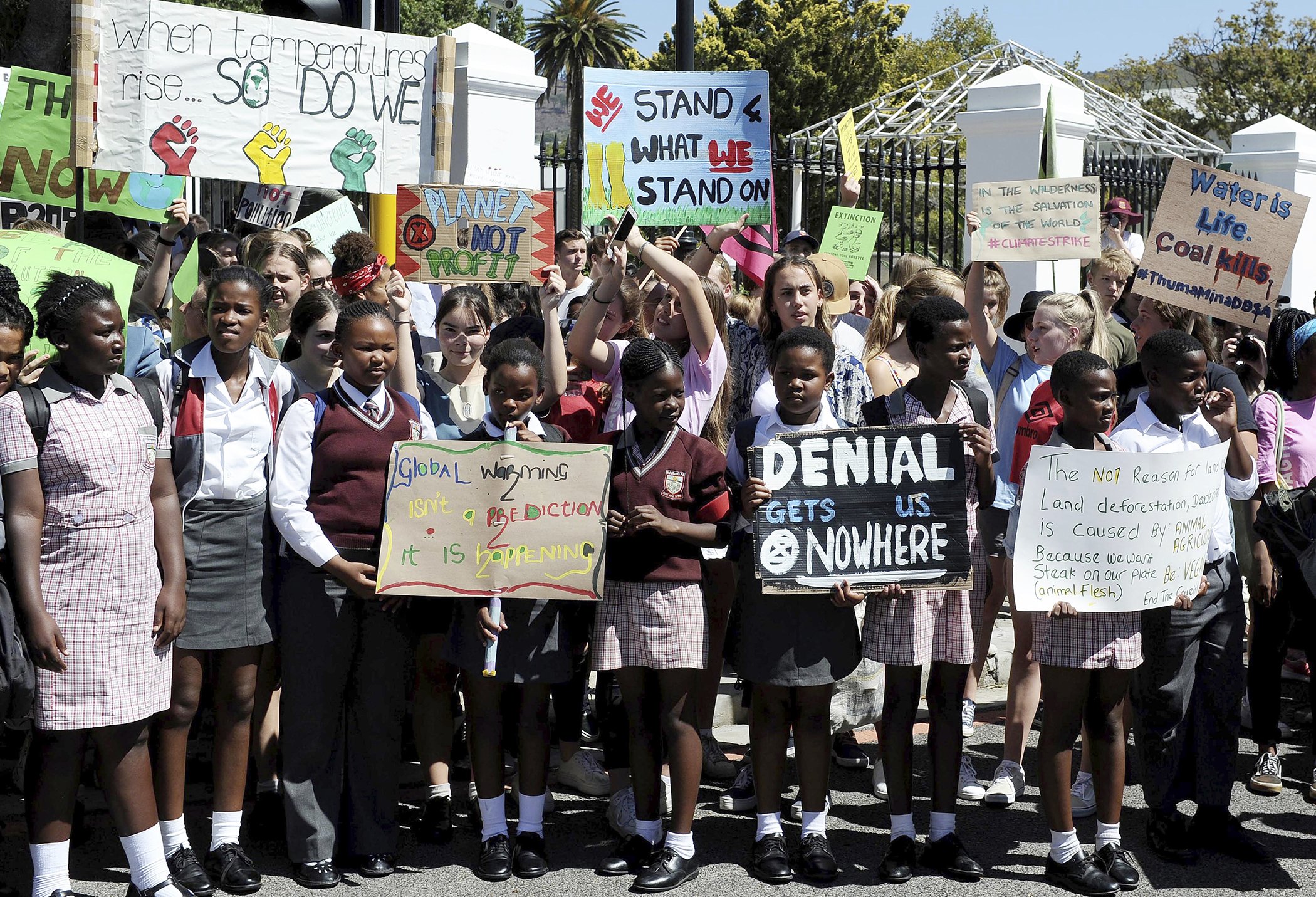
Although climate change has moved to the forefront of public life in the last decade, with activists such as Greta Thunberg and movements like Extinction Rebellion (XR) becoming household names worldwide, the climate crisis itself remains something which- for those who are fortunate enough to live without experiencing the effects of climate change- is still somehow detached from our own lives. Greta’s many speeches might have momentarily moved you, you might have silently agreed with the actions of XR when you watched them tying themselves to the House of Parliament on the six o’clock news, and perhaps you even shed a tear for the polar bears who are going extinct. And yet, for many people, if they engage in environmental activism, it is only through occasional action which err on the side of tokenism, like using reusable shopping bags, going vegan, or attending the odd FridaysForFuture demonstration. Perhaps as you’re reading this, you’re thinking of any habits you have adopted to “do your bit” for the environment. This is futile, however, because the way in which society views climate change- and has viewed it for far too long- means that climate change has been reduced to something towards which the people who are shielded from its most severe consequences remain largely indifferent. But who can blame then?
The mainstream environmental movement has long focused on individual actions as the only way to halt climate change. We are led to believe that if we all just recycle more, cycle more, use reusable shopping bags, ditch cars, ditch plastic straws, go vegan, go to demonstrations…. then climate change will stop! If we all earnestly committed to these actions, then climate change would indeed slow down. But the truth is, it is not realistic to expect everyone to commit to these actions, especially when we are all still living in a world which actively encourages our dependence upon fossil fuels. To function in the modern world, everybody-has to become complicit in the system which has caused climate change. Perhaps this is why the mainstream environmental movement has struggled so much to convey the urgency of the climate crisis to the masses: by telling people that is their duty to combat climate change through individual actions, they overburden people with guilt and risk overwhelming them. If a person believes that they must make what are often difficult decisions on behalf of the environment, in a world where total independence of fossil fuels is impossible, then they are more likely to take the “unethical” option because it is just easier. Or, they do something of which many of us are guilty: they become so overwhelmed that they switch off entirely. Not only is the approach of the mainstream environmental movement flawed in this way, but it is also exclusionary.
The environmental movement has long been criticised for being a bastion of middle-class white people- or even “a white middle class ghetto” as it was once entertainingly dubbed. The irony is stark: those who are disproportionately affected by the current climate crisis are people of colour living in the global south as well as people of colour living in communities throughout the global north, which are already beginning to suffer from the worst effects of climate change. From Indigenous people living in areas stricken by droughts or floods, to African-Americans living in the neighbourhoods hit hardest by Hurricane Katrina, to people of colour living in areas where the air they breathe is up to 40% more polluted than in predominantly white areas, racial inequalities are rife within the climate crisis, and it is a crisis which can only be perceived effectively through a totally intersectional lens. From the need for intersectionality, “climate justice” was born, and climate justice promises a more equitable, fairer, collective-focused movement.
Meanwhile, the mainstream environmental movement’s sustained focus on individual action alienates these communities- who are often also among the poorest – as well as other poor communities, because people with less money have no choice but to partake in activities deemed to be “bad” for the environment. It is undeniable that the majority of individual actions which have been advocated for so long by mainstream environmentalists remain inaccessible to poorer communities. Electric cars, carbon free energy sources, ethical clothing and veganism are all “choices” which are not choices at all: they are only choices if you have the money to afford them. In this way, poorer communities- and often, communities of colour- are stuck in a vicious cycle where they are unable to escape from the climate crisis even though they are suffering the most severely. The cruellest irony is that these communities typically have far lower carbon footprints than wealthier white communities. Nevertheless, members these communities are still told to “do their bit” for the environment, even though in reality, their actions are not significantly exacerbating climate change. Instead, the environmental movement needs to shift its focus.
The Extinction Rebellion movement undoubtedly has its flaws: among them are its staggering lack of diversity and its insensitivity towards BIPOC activists. However, what the Extinction Rebellion has succeeded in doing in the three years since its founding is shifting the focus of stopping climate change away from individual actions and towards holding governments and corporations accountable for causing climate change. With its demonstrations in front of government and corporate buildings worldwide, XR has started up a much-needed conversation about the integral roles played by successive governments and corporations in both the causation and the continuation of climate change. It is a welcome conversation, and one which has been preceded by the filing of more than 1,300 climate-related lawsuits worldwide since 1990, where various governments and corporations have been held accountable for their roles in the climate crisis (albeit to varying degrees of success). After all, it is not we, the consumers, who are responsible for the ice-sheets of Greenland melting. It is the governments which have failed to implement the legislation needed to stop corporations from mining the fossil fuels upon which we have become reliant. As consumers, we are simply doing what is says on the tin: consuming what is offered to us.
As we emerge from the worst of the COVID-19 pandemic and enter into a new era, it is promising to hear the focus of the “mainstream” environmental movement become not only more intersectional in light of the ongoing fight for racial justice, but also, more acutely aware of the importance of pressuring governments and corporations to enter in a post-COVID era of green economic recoveries. Most promisingly of all, it is no longer just the “environmentalists” who are invested in such measures: in the UK, the majority of the British public are in favour of a green economic recovery, according to the Climate Assembly. Environmental activism has undoubtedly moved into mainstream society over the last few years, thanks in no small part to movements like XR, lawsuits like Juliana v. United States and activists like Thunberg, Luisa Neubauer and Al Gore. As it becomes increasingly apparent to us all that the greatest fault lies not with us as individuals, but with the governments and corporations whom we are supposed to trust to protect us and those around us, we have to maintain pressure on these institutions to pursue policies which will protect not only our planet, but also its most marginalised populations.
This is not to say that individual actions are totally meaningless. However, if we demand reform from institutions first, and then focus on our habits as individuals, not only is this more achievable and accessible to more people, but it is also more likely to instigate the long-lasting change needed to truly stop climate change. As the old adage goes, you do not- and should not- have to fight your battles alone, especially when the battle wasn’t even started by you to begin with. The climate crisis is no different.
 A Northern Girl in a Southern World