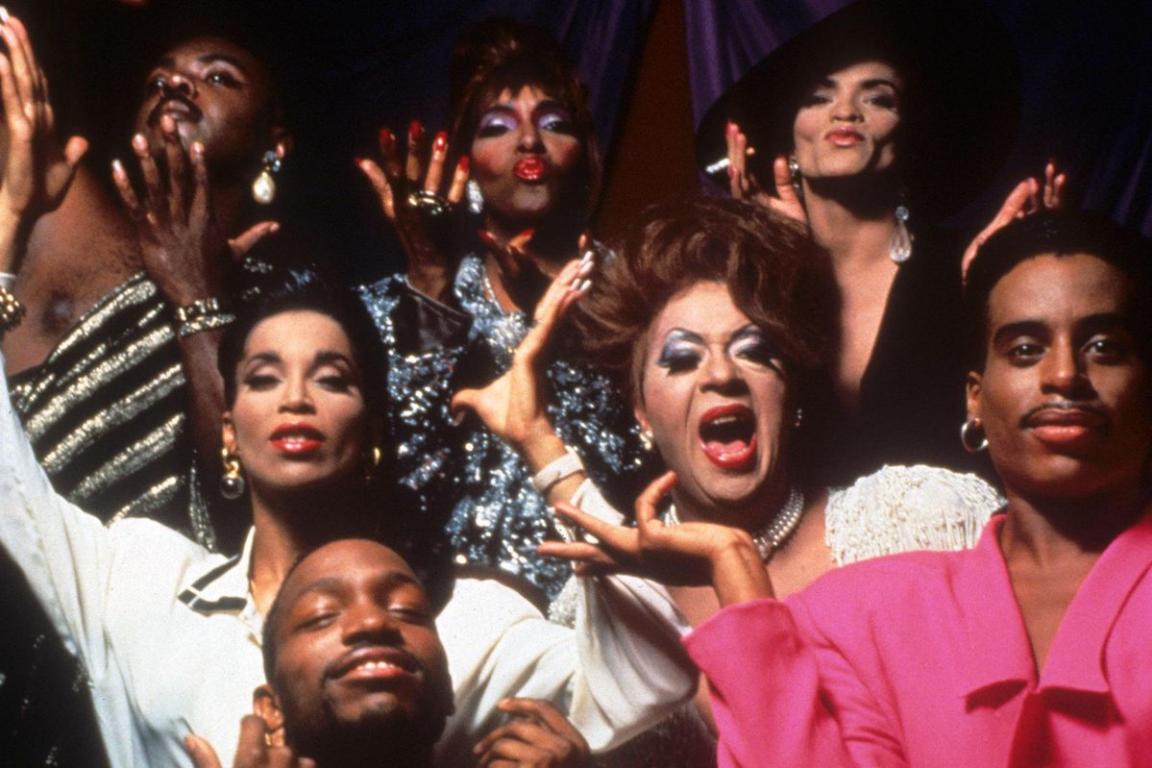
In the weeks since the Black Lives Matter movement has swept the globe, a recurring post which I’ve been seeing on social media is a photo of a protestor holding up a placard reading “Love Black People Like You Love Black Culture”. It’s becoming increasingly apparent that there exists a pernicious double standard in mainstream society, where those with privilege (in this post, I’m primarily referring to those who are white/cisgender-heterosexual/able-bodied) have a tendency to love the cultures of marginalised communities, without extending this love to the members of these communities. This problem seems to have become particularly pronounced when examining society’s love of Black culture but its disregard for the lives Black people. However, it is an extremely pervasive double standard, extending far beyond this particular example.
The importance of this double standard can’t be underestimated when you consider how significant culture is to us all. Culture is something which we all consume every day- often unthinkingly- and so it goes without saying that it shapes our views of the world around us. For many, culture also serves as an educational tool and it often influences our perceptions of people who appear different from ourselves. As the Black Lives Matter movement has surged, “educate yourself” has become a popular and enduring slogan, and white people and other non-Black people of colour are being encouraged to educate themselves on racial injustice through largely cultural means- books, films, TV series, podcasts. Meanwhile, for the members of marginalised communities like those who identify as BIPOC and/or LGBT+ and/or a person with a disability, culture can be the only way of encountering experiences which relate to your own. It is a tool of immense empowerment, but with this level of power, there is also a danger when the most privileged consumers adopt start to consume the culture of a community who they hypocritically do not actively support.
It has long been argued that through the medium of culture, society is more likely to accept minority communities by raising greater awareness for the issues faced by these people, as well as normalising minority experiences into the mainstream. This is true, to some extent at least, and when we enjoy cultural practises which differ from our own, a cultural exchange can take place, an exchange which may be beneficial those with privilege as well as the marginalised community from which the cultural practises originated. However, it cannot be ignored that many of these practises have been embraced by privileged people without there being an ‘exchange’; rather, practises have been appropriated (where the origins of many these practises are left unacknowledged). In turn, this trend for appropriation has engendered a woeful lack of awareness among privileged people about the struggles faced by the members of marginalised communities and has enabled harmful stereotypes to persist while it is claimed that there is greater “progress” for minority communities with each new year.
For Black communities, mainstream society’s adoration of Black music (hip-hop, RnB, jazz, soul, blues, country, grime, gospel…), dance (break dance, the Charleston, twerking, street dance, hip-hop dance…) and fashion (cornrows, braids, dreadlocks, hoop earrings, “Logomania”, snapback hats, bucket hats…) has not significantly translated into a greater acceptance of Black people, if the horrific anti-Black institutional racism which pervades in every level of Western society is anything to go by. For Asian communities, our fetishization of Asian women, our appreciation of various Middle, South, and Eastern Asian cuisines (Indian, Thai, Chinese, Lebanese, Korean, Turkish, Bangladeshi, Vietnamese, Japanese…), our adoration of all things K-Pop and our devotion to Asian owned brands like Samsung and Kia has not stopped prevalent but dangerous stereotypes about “Asians” (as if they were all one race) such as the “smart Asian”, “the nasty Japs”, the “scary Chinese” or the “terrorist Arabs”, as well as rampant Islamophobia. Meanwhile, the love for Pride parades and the Pride rainbow flag and for nights out at gay clubs rather than other nightclubs, as well as the increasing obsession with queer films, TV series and books- as the likes of Call Me By Your Name, Euphoria, Queer Eye and RuPaul’s Drag Race become mammoth mainstream successes- defy the fact that the number of hate crimes against LGBT+ people are at their highest in a decade in the US and have more than doubled in the UK, while self-harm and suicide rates are still significantly higher for LGBT+ youth significantly higher than for cisgender, heterosexual youth. It is apparent that the consumption of a culture has not equated to the acceptance of its people.
Even if those of us born with privilege- whether that be because we are white, cisgender, heterosexual or able-bodied- use the tired trope that we love the culture of a marginalised community and therefore how can we possibly be prejudiced against them, these examples prove that this is most definitely not true. It is wholly possible to enjoy a culture while remaining prejudiced against the community from which the cultural practises of which you’re so fond originated. And yet, consuming another culture may seem innocuous enough- what is so inherently wrong about enjoying queer culture when you’re not queer, or Black culture when you’re not Black? Th act itself, of enjoying the culture of a traditionally marginalised community if you are not a member of that community, is not wrong in itself. What is wrong is the way in which mainstream society has a tradition of becoming selective of their attitudes towards marginalised people, the same people whose cultures they have avidly consumed. In other words, they enjoy all the “best” parts of a minority identity which without directly benefiting the minority community from which the culture originated. When you fail to understand or appreciate the context behind the cultural practise in which you are engaging, you risk disrespecting another culture.
Perhaps we should be asking why do those with privilege become so selective, deciding to love a culture but not its people (or at least, any people who do not adhere to stereotypes)? Through culture, it is easy to interpret what is being shown in a way which is deemed appropriate. It is this subjectivity that allows people to become selective: they select which elements of that culture they want to appreciate- which are typically those which are perceived to be the most enjoyable and “easy”. In short, they relish whatever makes them feel good, and ignore anything that might force them to realise that not everyone enjoys the same privilege that they do. This may explain the popularity of white saviour narratives in films like “The Help” and “Green Book” or films which perpetuate the funny-Black-best-friend narrative like “Clueless” as well as feel good shows like “Queer Eye” over more thought provoking (and therefore more uncomfortable) works. A film where white and Black people live together happily ever after, or a show about five sassy gay guys giving makeovers to (largely) cis-het white guys panders to the stereotypes that society already holds, and provides us with sanitised versions of these cultures which do not force us to confront our own moral compasses and question whether or not we have been complicit in their oppression.
Instead, culture which uses too many stereotypes- as entertaining as they may be- distorts the perspectives of consumers so that they often fail to understand not only their complicity in the oppression, but also the fact that so many marginalised people exist beyond the narrow frameworks of the representations which they may have seen on TV or read about in a novel. If what we watch or read is supposed to reflect society, then people who have spent their lives being marginalised know that this remains largely untrue. The popularity in the mainstream of particular elements of a minority culture over other elements, and the misrepresentation, which is often subsequently engendered by this (think about the popularity of the Black-originating rap/hip-hop music, and the subsequent popular misrepresentation of young black men engaging in hip-hop culture as being “street”, aggressive and hyper-sexualised), is what can lead to privileged people becoming ignorant of the realities of those who are marginalised.
This ignorance can sometimes manifest itself in the horrible habit which those with privilege have of switching off entirely from the struggles faced by a marginalised community, as their struggles not only force an interrogation of one’s own moral compass, but also require more “hard work” than simply watching a film or listening to some music. If someone watches “Brokeback Mountain” once or listens to a Kendrick Lamar song about racism, they more than likely remain unaware of the struggles which inspired these works and will continue to be ignorant. That is what I mean when I say that privileged people so often love a culture but not it’s people: there may not necessarily be an inherent malice aimed towards a marginalised community, but continued ignorance of the struggles endured by these communities is just as bad as the disrespect of cultural practises adopted by privileged people with no acknowledgement of the roots of these practises.
Even though the last decade has made leaps and bounds in terms of making the mainstream decidedly more diverse and culture has transcended from just entertainment into an important educational tool, the hypocrisy of a society which embraces all manner of cultural practises while actively marginalising minority communities remains one of the great hurdles which we are yet to overcome.
 A Northern Girl in a Southern World